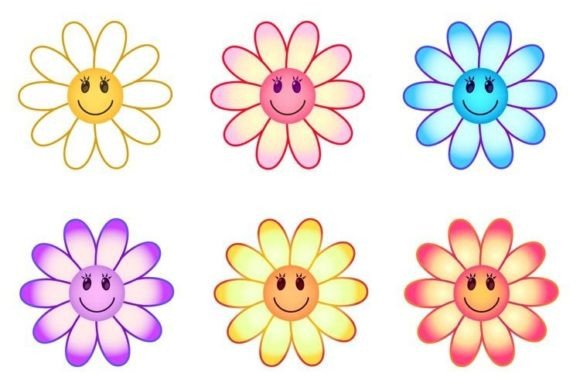
Reviewing Smiling Flowers for Embroidery Projects
As a designer who has spent years translating digital art into thread, I have learned that not every pretty illustration translates well to fabric. When I first opened the Smiling Flowers collection, my initial reaction was one of cautious optimism. The premise is charming: a set of colorful flowers featuring smiling chamomiles in various gradients, isolated on a white background. But charm alone does not make a viable machine embroidery design. We need to look at line weight, color transitions, and structural integrity before committing to a hoop.
The First Impression: Mood and Visual Personality
The visual personality of Smiling Flowers is undeniably cheerful. The concept of anthropomorphic chamomiles with smiles creates an immediate emotional connection, which is crucial for retail products. In the world of Illustrations and Graphics, this kind of whimsical character design stands out against more traditional floral patterns. However, from an embroidery standpoint, "smiling" implies facial features. These details are often the first to get lost if the stitch count is too low or the stitch density is not managed correctly.
The use of gradients in the original artwork is a double-edged sword. While beautiful on screen, gradients in embroidery require careful planning. If these are converted into a standard embroidery file using solid thread colors, we lose the smooth transition. If they are digitized using complex blending techniques, the stitch count skyrockets. My advice is to look closely at how the designer handled these gradients. Are they using varied fill stitch directions to create depth, or are they relying on simple color blocks? For a handmade product, simplicity often reads better than complexity.
Real-World Application: The Tote Bag Test
To truly evaluate Smiling Flowers, I imagined a specific real-life scenario. A client wants a custom tote bag design for a local farmers' market. They want something bright, friendly, and durable. This is where the rubber meets the road. Canvas tote bags have a distinct fabric texture that can swallow up fine details.
If I were stitching this design onto a heavy cotton canvas, I would be concerned about the smaller elements of the chamomile faces. Would the smile remain visible after fifty washes? Would the eyes turn into blobs? This is why testing on scrap fabric is non-negotiable. I would recommend using a cut-away stabilizer for this application to prevent puckering, especially since tote bags carry weight and undergo stress. The cheerful nature of the design fits perfectly here, appealing to eco-conscious shoppers who appreciate a personalized gift with personality.
Versatility Across Product Lines
Beyond tote bags, where else does this collection shine? The versatility of Smiling Flowers makes it a strong candidate for various craft business offerings. Consider sweatshirt embroidery. A small cluster of these smiling flowers on the left chest of a crewneck sweatshirt creates a subtle yet engaging detail. It moves away from loud, all-over prints and offers a boutique feel.
For Etsy seller audiences, baby items are a huge market. Baby embroidery requires softness and safety. If the design is digitized with appropriate underlay stitches, it can sit flat on onesies or burp cloths without irritating sensitive skin. The smiling aspect adds a layer of warmth that parents love. Similarly, these designs could work as embroidered patch motifs. Patches allow for higher stitch densities and tighter margins, preserving the integrity of the small facial features that might otherwise struggle on stretchy knits.
However, caution is needed with holiday embroidery or seasonal items. While chamomiles are generally spring and summer flowers, their cheerful demeanor could be adapted for back-to-school kits or spring wedding gifts. The key is context. Using them on a winter scarf might feel disjointed unless the color palette is adjusted to cooler tones.
Technical Challenges and Design Limitations
We must address the limitations honestly. The original description mentions "gradients." In digital design assets, this looks seamless. In thread, it is challenging. If you are an embroidery project manager, you need to verify if the file uses true gradient stitching (which increases production time and thread breaks) or simplified color steps. For high-volume commercial embroidery, simplified steps are often preferred for speed and reliability.
Another critical factor is hoop size. If the design is large, ensure your machine can handle the dimensions. If it is small, check the minimum recommended size. Stitching these detailed faces on a curved surface like a cap is risky. The distortion inherent in cap embroidery can warp the smiles, turning a happy flower into a confused one. For caps, I would recommend simplifying the design or using an applique design technique where the face is printed or fused, and only the petals are stitched.
Dark fabrics present another hurdle. The "isolated on white background" description suggests the design relies on light colors. On black or navy fabric, you will need to adjust the thread palette significantly. A white outline or running stitch border might be necessary to make the flowers pop against dark backgrounds. Always test a printable mockup in black and white first to check contrast levels before threading the machine.
Commercial Viability and Brand Consistency
For small shop owners, consistency is key. Does Smiling Flowers fit your brand aesthetic? If your brand is minimalist and modern, these whimsical characters might clash. But if your brand is playful, organic, and community-focused, they are a perfect match. The perceived value of a finished product featuring unique, character-driven art is often higher than generic florals. Customers connect with personality.
Before listing these on your store, confirm the licensing terms. Just because you bought the digital embroidery file does not automatically grant unlimited commercial rights. Check if there are restrictions on the number of physical items you can sell. This is vital for scaling your small shop product line.
Final Designer Notes
My final verdict on Smiling Flowers is positive, provided you approach it with technical diligence. It is not a plug-and-play solution for every fabric type. Here is my checklist for success:
- Test on Scrap Fabric: Always run a test stitch-out on the actual material you intend to use.
- Check Thread Contrast: Ensure the smiling features stand out against the petal colors.
- Review Stitch Density: High density can cause puckering on thin fabrics; low density may show gaps.
- Confirm Hoop Size: Make sure the design fits comfortably within your machine’s maximum area.
- Inspect Small Details: Zoom in on the eyes and mouths. Are they clean, or do they look jagged?
- Use Proper Stabilizer: Match the stabilizer to the fabric weight and stretch.
- Verify Licensing: Confirm you can sell items made with this design.
In conclusion, Smiling Flowers offers a delightful addition to any embroidery library. It bridges the gap between cute illustration and functional decor. With careful digitization review and smart fabric choices, it can elevate your custom apparel and gift lines. It reminds us that embroidery is not just about covering fabric with thread; it is about injecting joy into everyday objects. Whether you are creating a personalized gift for a friend or stocking your online store, this design has the potential to bring a smile to your customers' faces, just as the flowers do.